
Straitened Times Review
Straitened Times
HRelease
2026
PC · Mac
Straitened Times opens with a betrayal that actually matters mechanically: the father has been embezzling from work to keep two families afloat, the house is gone, and the protagonist and his sisters end up living out of a motel. It is a blunt setup, but it is the right kind of blunt for a sandbox game — HRelease uses the sudden poverty to justify every job, every favor, every “sexy interaction” the game later gates behind stat checks. As one forum regular put it defending the design, without that collapse “there’s no lost household and motel living… no reason for the main character to earn extra cash,” and they’re right. The father’s crimes are load-bearing plot, not decoration.
The game runs on Ren’Py, and at 0.70.1 it’s grown into a genuinely large sandbox: school, diner, bank, motel and multiple households to track, all wrapped in tags that read like a full corruption-game checklist — incest, harem, prostitution, religion, cheating, pregnancy. An optional incest patch swaps the “communant” framing for direct family relations, which one player summed up neatly: “It’s how the game should be played (and is probably intended)… Aunt Kate makes much more sense than Communant Kate.” That the patch exists at all tells you HRelease is working around platform censorship rather than avoiding the theme.
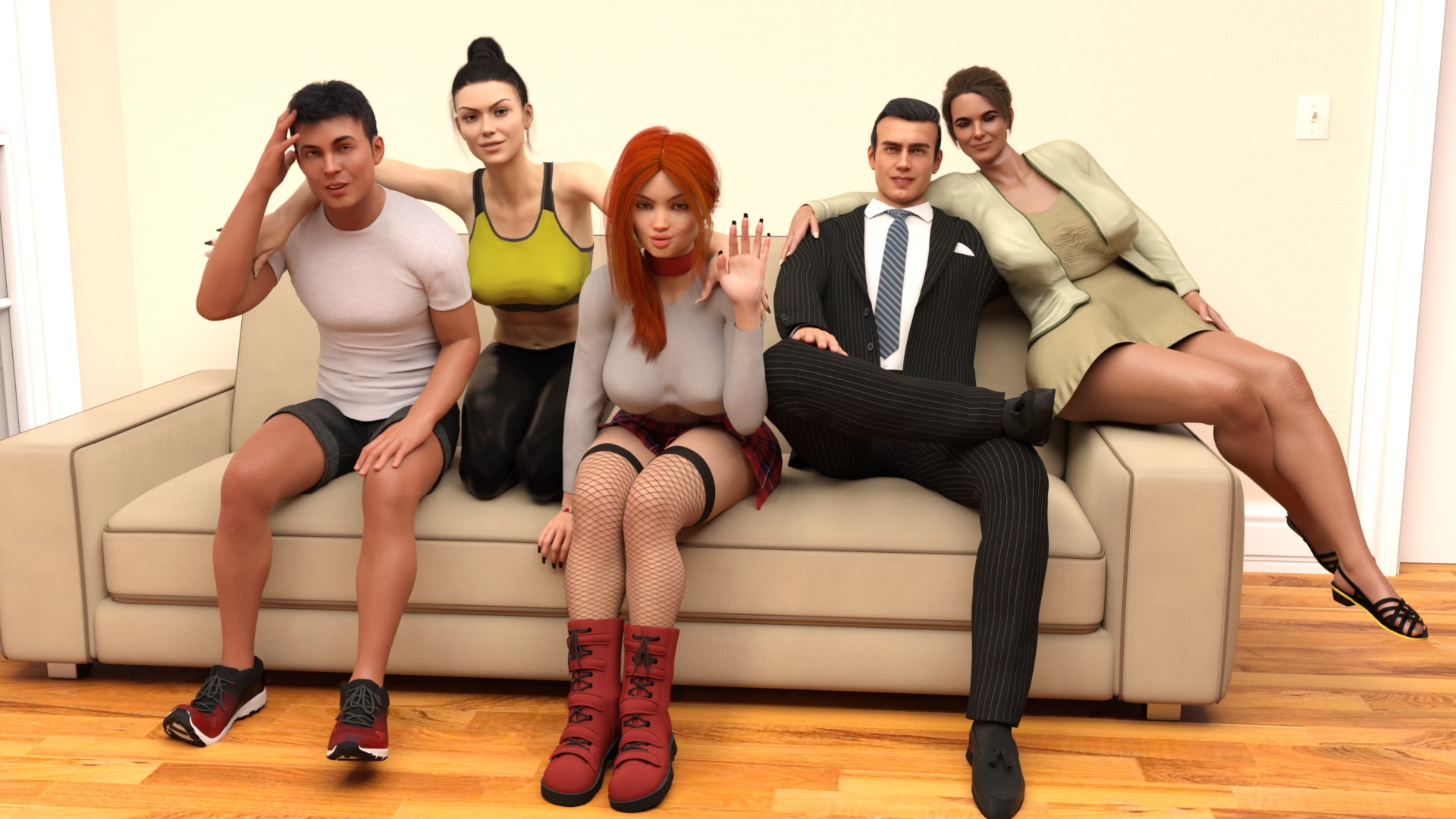
Where the game earns its keep is the Allure/Likeability split. Peeking or pushing a character raises Allure — the stat that actually unlocks new content — but drops Likeability, which you have to rebuild through conversation before you can push again. It’s a real system with real trade-offs, not a single number you top up by clicking “talk” repeatedly. The Diya Holkar art-teacher thread is the clearest example: unlocking her requires stacking prerequisites across the diner staff, the PE teacher route and her own relationship track before her sex stat will move past a “peck” kiss.
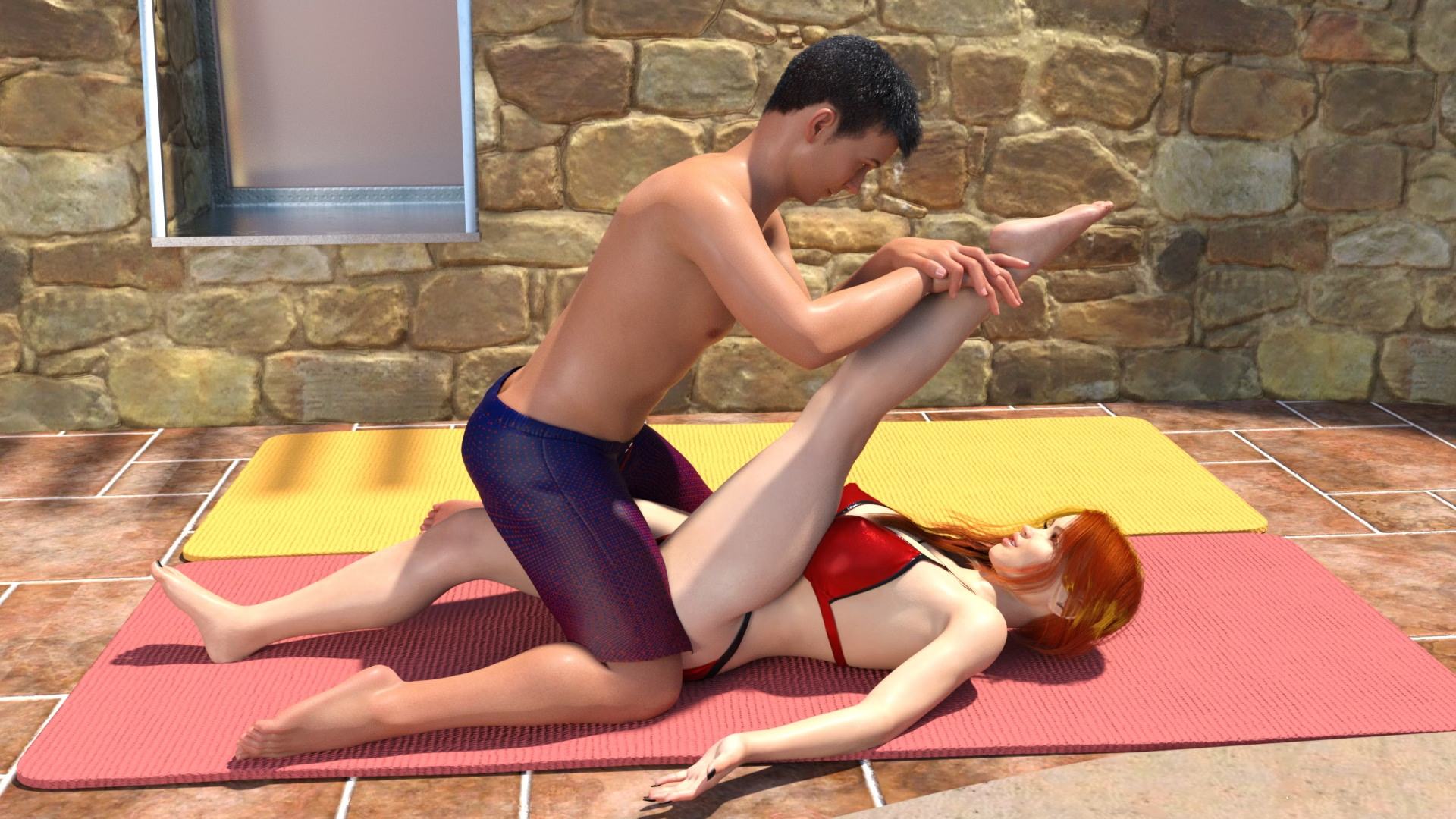
That depth is also the game’s biggest liability. Multiple threads in the community are just players asking how any given system works — what unlocks the “requests” dialogue option, how to stop a bad ending where the sisters get shipped to boarding school, why an Allure grind stalls at 17. The answers exist, but they live in forum posts and third-party guides, not in the game itself. Add to that the genuine bugs around the 0.70.1 update — save incompatibility, “unsupported pickle protocol” crashes, and enough corrupted-install reports that veteran players now default to “reinstall clean” as the first troubleshooting step — and you get a game whose ambition regularly outruns its polish.

No f95zone community score is attached to this thread, so the rating above is built from the sentiment in the reviews themselves: consistent praise for the writing and the stakes the premise creates, tempered hard by grind complaints and the update-cycle bugs. Call it a strong, unfinished sandbox rather than a polished one.

If you enjoy sandbox corruption games that make you work for every scene and don’t mind consulting a guide to do it, Straitened Times delivers real substance under the grind. If you want a game that explains its own systems, wait for a more stable build — or bring a walkthrough.

Support the Developer
Pros
- +A premise with real teeth — the father's embezzlement and the collapse into motel living gives every job, favor and compromise an actual narrative reason to exist
- +A two-axis relationship system (Allure and Likeability) that lets characters like Diya Holkar develop along competing tracks instead of one flat approval meter
- +An unusually active modding and guide scene — cheat mods, energy fixes and community-maintained walkthroughs keep getting updated alongside each build
Cons
- −The grind is punishing without outside help: players openly admit they lean on community guides just to know what raises Allure versus what tanks Likeability
- −Build 0.70.1 shipped save-breaking issues, including reports of 'unsupported pickle protocol' crashes when loading saves from 0.69.1
- −Some players find the sprawling cast — father, stepfamily, commune elders, neighbors — bloated to the point of diluting the routes they actually care about